Where in the Middle East was the country of the Gerasenes?
The short answer:
The country of the Gerasenes could refer to a few areas east and south of the Sea of Galilee. It was most famous because of the episode in the Gospels where Jesus casts out a host of demons and they enter into a herd of swine. The place where this event occurred was likely a town named Hippus on the eastern shore of the Sea of Galilee.
The country of the Gerasenes (also known as Gergesenes or simply as Gergasa or Gergesa) was a land to the south or southeast of the Sea of Galilee, though it isn’t clear where exactly it was.
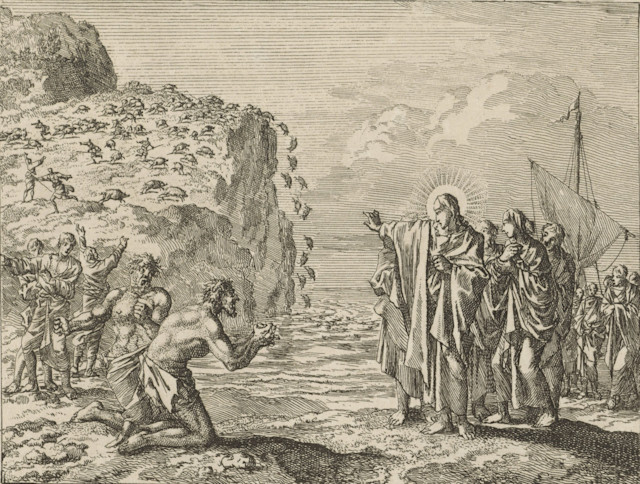
Jan Luyken - Christ in the Land of the Gadarenes - 1712
But where was this place exactly? The country of the Gerasenes is usually associated with modern-day Kursi. New Testament manuscripts often refer to the country of the “Gadarenes” or the “Gerasenes” instead of “Gergesenes.” Because both Gerasa and Gadara were cities in the same region, southeast of the Sea of Galilee and east of the River Jordan, it’s difficult to tell which city was being referenced, as neither are really a good fit for the place described in the Gospel accounts.
While scholars dispute the exact location based on geography and the different spellings that were used, we get a stronger clue from history. In the ancient world, there emerged a tradition among Byzantine Christians to venerate a particulate site as the exact location of the miracle described in the Gospels, a site on the lake shore north of Hippus. This location is a good match because, unlike Gerasa and Gadara, it is actually on the coast of the Sea of Galilee and this particular spot features a steep bank on the shore of the lake—making it the only real candidate in the area for a location that matches the one described, as the swine were reported as having charged down a steep bank into the sea. Hippus is much closer to the Sea of Galilee, somewhat distant from Gadara and quite distant from Gerasa. A monastery was built there but was destroyed by Persians in AD 614. It was later rebuilt, but ultimately destroyed by the Galilean earthquake of 749.
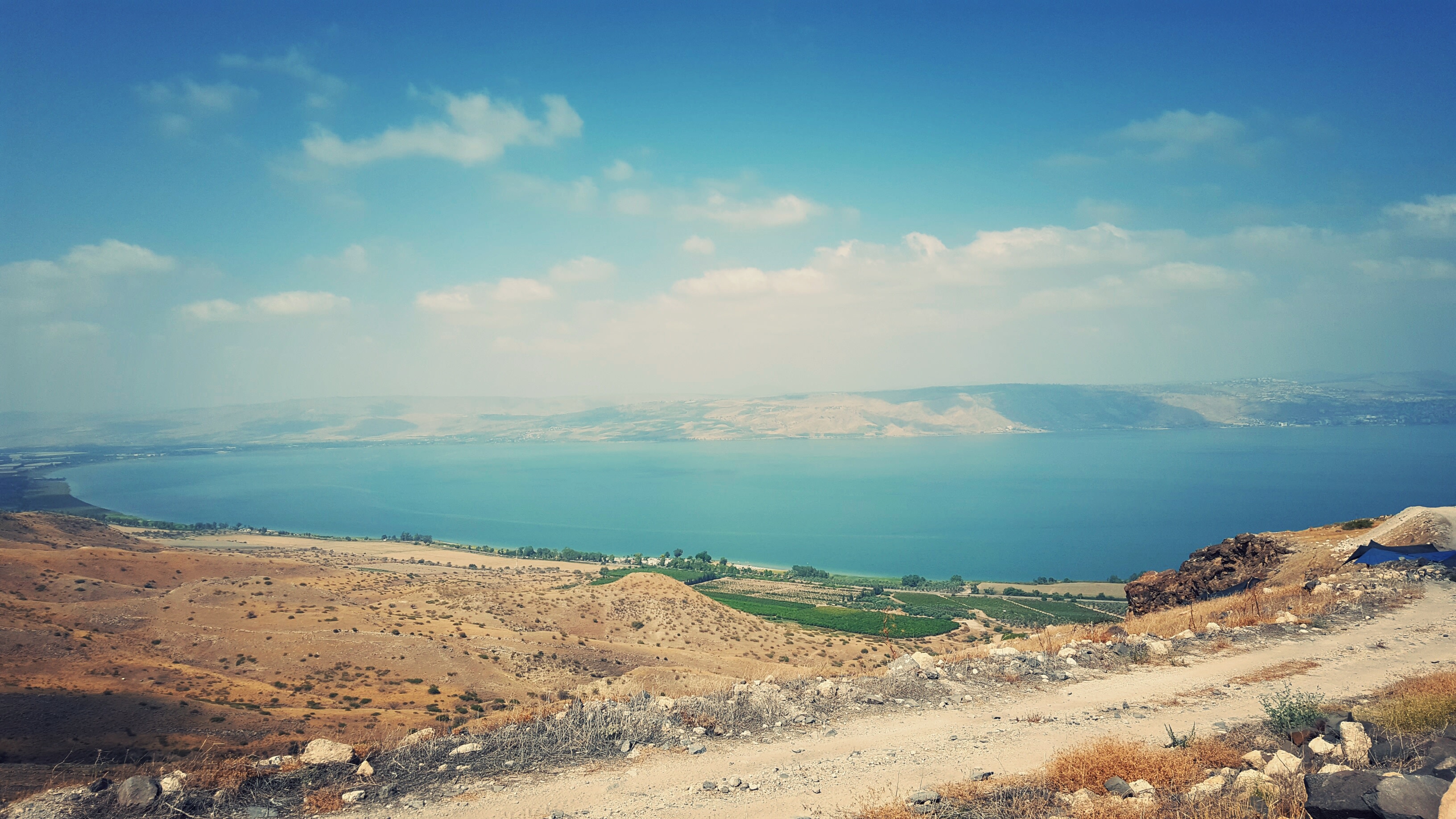
A contemporary photograph of the region surrounding Hippus (or Sussita) on the Sea of Galilee.
Given that there was little standardization in the ancient world, it’s not improbable or strange that the actual location might have been Hippus rather than Gadara or Gergesa specifically. The Roman historian Pliny refers to all the cities in this area as the “Decapolis” in his Natural History (circa AD 77). In the general area south of Caesarea Philippi, he lists Gerasa, Scythopolis, Hippus, Gadara, Pella, Philadelphia, Capitolias, Canatha, Raphana and Damascus. Because all of these locations were in the same region, and were even associated with one another, it would not be unusual were a copyist to associate the event with one of the larger or more prominent cities in that region and simply put that down as the name, rather than the exact spot. It would be like someone writing about an event that took place in a small town just outside of Los Angeles, but because that town was relatively unknown, the person simply said that the event took place in Los Angeles. But because LA is a huge, sprawling area, people reading the account later would certainly get confused as to where exactly it was. In that case you would want to use clues from the actual account to narrow down the place where the event happened. The Gospel accounts describe an area on the eastern shore of the Sea of Galilee, which fits Hippus much better.
How far is Galilee from Gerasenes?
If you assume that the Byzantine monks were correct in placing the site of the miracle on the eastern side of the Sea of Galilee, near the town of Hippus, then this area would be in the heart of Galilee proper—east of other famous New Testament locations such as Capernum and Nazareth. It was inhabited by a variety of people. Because the story mentions that there were pig farmers nearby, there were probably more non-Jews (gentiles) living in this area. Swine were considered unclean according to Jewish purity laws, so Jews would not have raised pigs to eat.
Meaning and pronunciation of Gerasenes
The root meaning of “Gerasenes” is not entirely clear. The form “Gerasenes” comes from a Latin adjective for something of or pertaining to the area or inhabitants of Gerasa, but what “Gerasa” means is not clear.
As a Latin word, Gerasenes would likely have been pronounced with a hard “G”: gur-ass-en-ess”, but modern people pronounce it in different ways, often with a soft “G” sound (a “J” sound, as in “Gem”).
Subscribe
Life-giving writing by Christian scholars sent to your inbox once per month

Zachary Porcu has a PhD in church history from the Catholic University of America in Washington DC, with additional degrees in philosophy, humanities, and Classics (Greek and Latin). He is an Eastern Orthodox Christian.
Keep reading
Jesus and the Syrophoenician Woman: Gentile Salvation

Who was the first woman preacher in the Bible?
Was Jesus a Rabbi?
Who was Phanuel? Archangel or Father of Anna?
Is “love conquers all” in the Bible?