Maher-Shala-Hash-Baz, the Son of the Prophet Isaiah
The short story:
The “long name” in Isaiah is Maher-Shala-Hash-Baz, the name of one of the Prophet Isaiah’s sons. It is a double prophecy about the release of Judah from captivity and the coming of Christ.
The book of Isaiah features a long name: Maher-Shala-Hash-Baz. It is often considered the longest name in the Bible, though that depends on how you count. It first occurs in Isaiah 8:1:
“Moreover the Lord said to me, ‘Take a large scroll, and write on it with a man’s pen concerning Maher-Shalal-Hash-Baz.’”
Its other appearance is in Isaiah 8:3:
“Then I went to the prophetess, and she conceived and bore a son. Then the Lord said to me, ‘Call his name Maher-Shalal-Hash-Baz.’”
In order to understand what’s going on with this name, we need to understand the context for the prophecy of Isaiah.
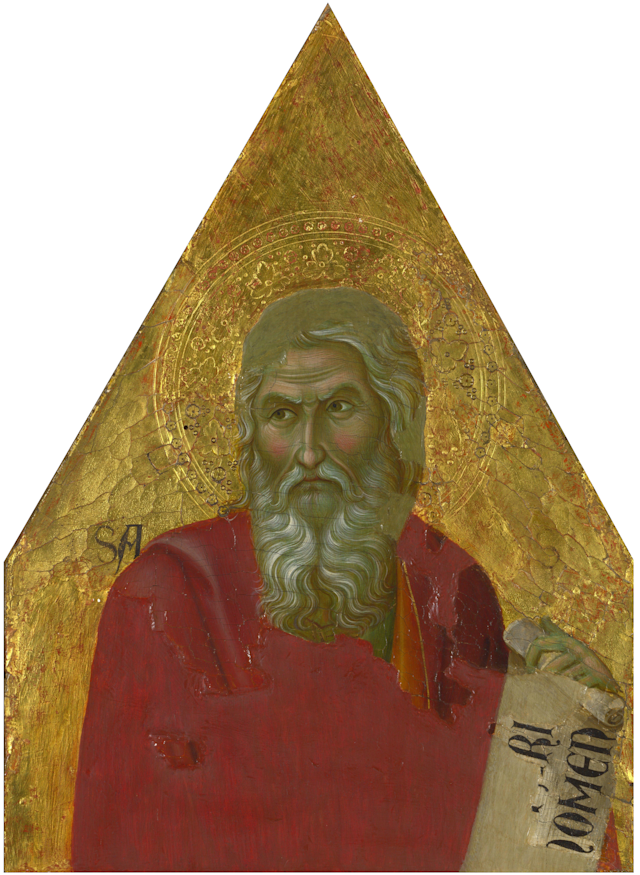
Ugolino di Nerio - Isaiah - from the Santa Croce Altarpiece - circa 1328
It was at this point that two sons were born to Isaiah the prophet. The older son was named Shear-Jashub, which means "A remnant shall return" and the younger was named Maher-Shala-Hash-Baz, meaning, "Quickly to spoils, plunder speedily.” Why do these names matter? As you might expect from a prophet, even the names of his sons were prophecies.
By time Hash-Baz was two years old, Assyria had conquered Israel and Syria, which meant that those nations would no longer attack Judah. Israel’s culture was effectively destroyed, and they intermarried with Assyrians, becoming the Samaritan people we see in the New Testament. They adopted a kind of heretical offshoot of the religion of ancient Israel and were a neighboring, rival people group.
As long as Ahaz, the king of Judah, reigned, the Assyrians did not bother Judah. But when Hezekiah succeeded Ahaz, he allied with the king of Egypt to rebel against the Assyrians. This rebellion didn’t go well. The people of Judah were defeated and Judah became a vassal to Assyria. War again broke out between the two, and the king of Assyria, Sennacherib, sent a letter threatening Hezekiah, no doubt demanding their submission.
Isaiah chapter 37 records Judah’s response to the threat from the Assyrians:
Then Isaiah the son of Amoz sent to Hezekiah, saying, “Thus says the Lord God of Israel, ‘Because you have prayed to Me against Sennacherib king of Assyria, this is the word which the Lord has spoken concerning him:
“The virgin, the daughter of Zion,
Has despised you, laughed you to scorn;
The daughter of Jerusalem
Has shaken her head behind your back!Whom have you reproached and blasphemed?
Against whom have you raised your voice,
And lifted up your eyes on high?
Against the Holy One of Israel.”’”
How did it end? An angel of God attacked the Assyrian army and reportedly killed 185,000 men in a single night. The Assyrians were so terrified by this act of divine majesty and power that the war was effectively over. In the context of the ancient world, this event would have been tantamount to one of the gods striding forth in battle, reminiscent of the most epic scenes in the Iliad.
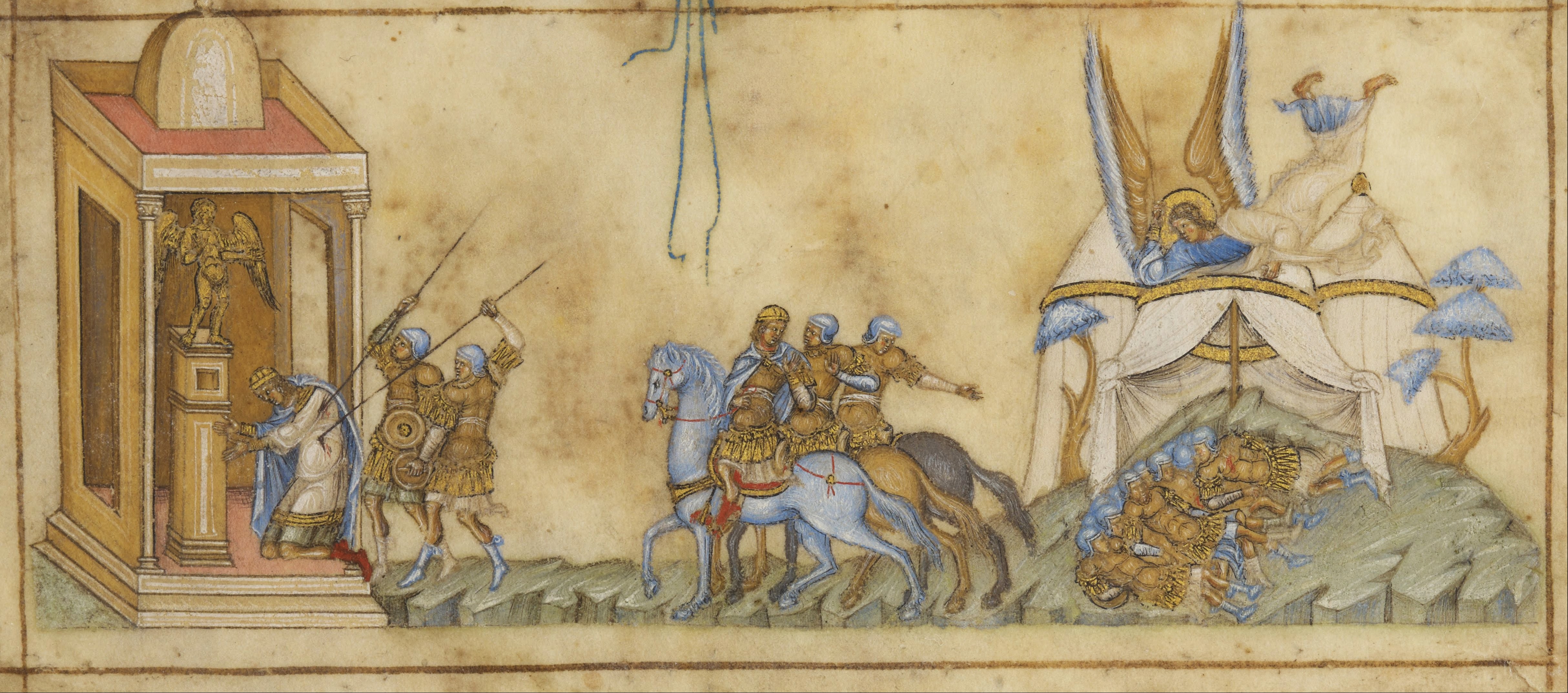
This manuscript illumination from circa 1300 depicts the death of Sennacherib and the demise of the Assyrian army at the hands of an angel.
What is the meaning of Maher-Shala-Hash-Baz?
To understand the full meaning of this prophetic act by Isaiah, you have to appreciate how much Isaiah anticipated what would happen with Jesus, hundreds of years later.
All the early Christians understood that Isaiah was a prophetic book about the Gospel. Isaiah is one of the most quoted parts of the Old Testament by the New Testament authors. Saint Gregory of Nyssa said that Isaiah, “knew more perfectly than all others the mystery of the religion of the Gospel.” Saint Jerome said that Isaiah "was more of an Evangelist than a Prophet, because he described all of the Mysteries of the Church of Christ so vividly that you would assume he was not prophesying about the future, but rather was composing a history of past events.” And Saint John himself, author of the Gospel of John, says that Isaiah “saw Jesus' glory and spoke about him” (John 12:41).
How then do we take the name Maher-Shala-Hash-Baz? Like many things in the Old Testament, this name was what you might call a double prophecy: it was a prophecy for both for the immediate future and the ultimate future—the ultimate defeat of death and evil at the hands of Christ. So, when he named his son, Isaiah predicted both the fall of the Assyrians and the fall of death and the devil.
Subscribe
Life-giving writing by Christian scholars sent to your inbox once per month

Zachary Porcu has a PhD in church history from the Catholic University of America in Washington DC, with additional degrees in philosophy, humanities, and Classics (Greek and Latin). He is an Eastern Orthodox Christian.
Keep reading

Jesus went to Hell for 3 days as seen in Scripture

Hineni in Hebrew: “Here I am” from God and Man
Who was Jotham, king of Judah?
What are the prophetic books of the Bible?
Who is Esaias in the Bible? Answered by a Christian Scholar